

Introduction
In lithium-ion and sodium-ion battery manufacturing, the binder accounts for only a tiny fraction of the electrode composition (usually 1% to 5% by weight). However, its impact on electrochemical performance, cycle life, and electrode structural integrity is monumental.
As the industry transitions towards higher-capacity anodes (like silicon-carbon anodes) and greener manufacturing, switching from traditional oil-based binders to water-soluble binders has become a major R&D focus.
In this technical guide, we will compare the four most prominent battery binders: PAA (Polyacrylic Acid), SBR (Styrene-Butadiene Rubber), CMC (Carboxymethyl Cellulose), and the industry-standard PVDF (Polyvinylidene Fluoride).
1. Traditional Oil-Based Binder: PVDF
For decades, PVDF has been the absolute king of cathode binders due to its excellent electrochemical stability and strong adhesion.
-
Solvent required: NMP (N-Methyl-2-pyrrolidone) – an organic solvent.
-
Best Used For: High-voltage cathodes (like LFP, NMC) and traditional graphite anodes.
-
Pros: Exceptional thermal stability, highly resistant to oxidation at high voltages, and excellent mechanical strength.
-
Cons: NMP is toxic, expensive, and requires costly recycling infrastructure. Furthermore, PVDF has poor flexibility, which fails to accommodate the massive volume expansion of advanced silicon anodes.
2. Water-Soluble Binders: The Green Revolution
To eliminate toxic NMP solvents, the battery industry has aggressively adopted water-soluble binders for the anode side.
A. CMC (Carboxymethyl Cellulose)
CMC is a semi-synthetic polymer derived from natural cellulose. It acts primarily as a thickener and dispersion stabilizer in the slurry.
-
Pros: Excellent dispersion capability, ensuring active materials and conductive agents (like High Purity Carbon Nanotubes FT9110) are uniformly mixed.
-
Cons: Highly brittle on its own; it cannot withstand the bending forces of electrode rolling (calendering).
B. SBR (Styrene-Butadiene Rubber)
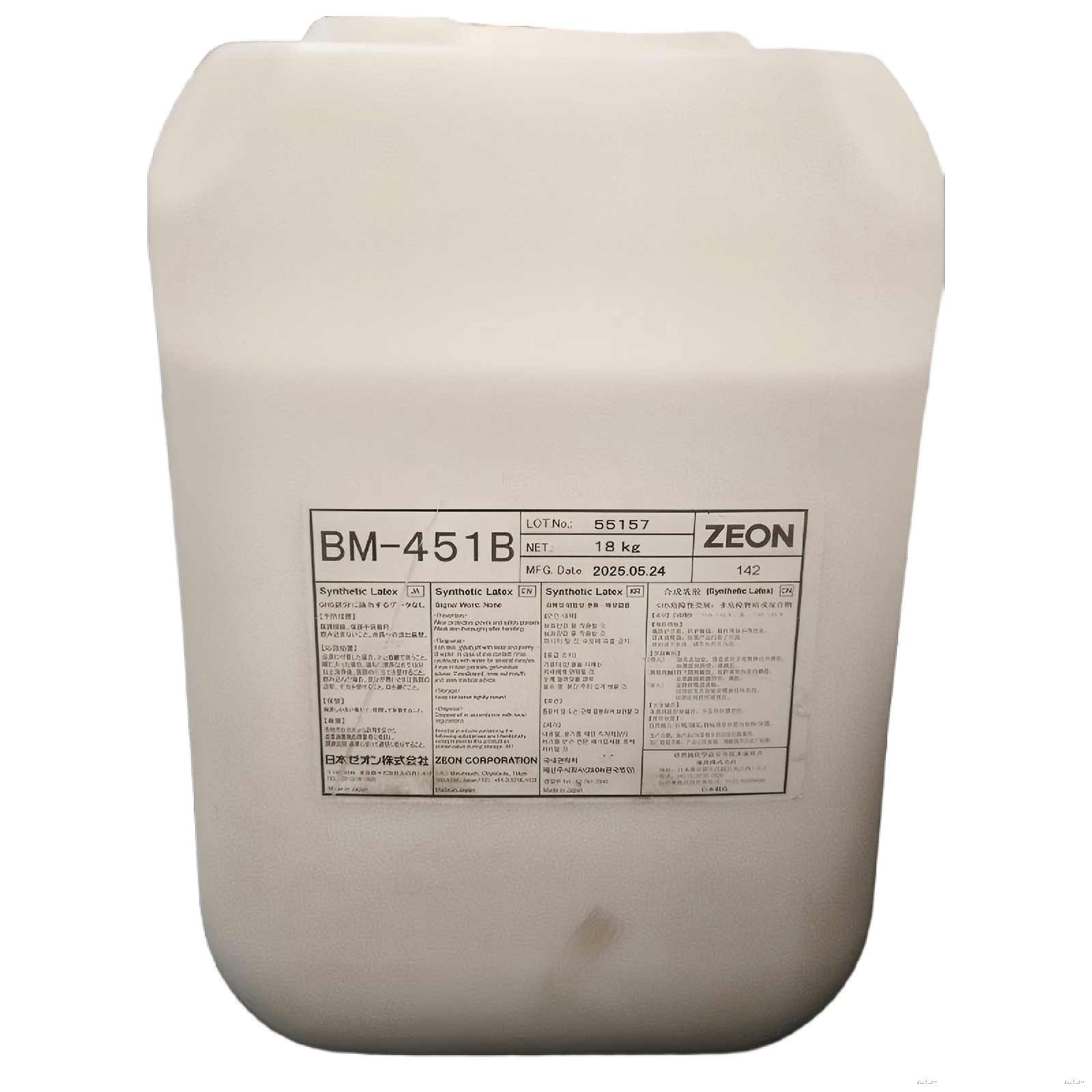
Because CMC is too brittle, it is almost always paired with SBR, a synthetic rubber emulsion that provides the missing elasticity.
-
The Dynamic Duo (CMC + SBR): In standard graphite anodes, a blend of CMC (thickener) and SBR (elastic adhesive) is the global industry standard.
-
Pros: Exceptional flexibility, strong binding force, and highly cost-effective.
-
Cons: Poor oxidation resistance at high voltages, limiting its use strictly to the anode side ($<1.5\text{ V vs. }Li/Li^+$).
C. PAA (Polyacrylic Acid)
With the rise of next-generation high-capacity Silicon-Carbon (Si-C) anodes, CMC+SBR reached its physical limit. This is where PAA shines.
-
Pros: PAA contains a high density of carboxyl groups ($-COOH$), which form strong hydrogen bonds with the oxide layer on silicon particles. It exhibits a high mechanical modulus, meaning it can mechanically constrain the massive volume expansion ($>300\%$) of silicon during cycling.
-
Cons: Lower flexibility compared to SBR, and highly sensitive to slurry pH adjustments.
3. Technical Comparison Table
| Property | PVDF | CMC | SBR | PAA |
| Solvent Type | Organic (NMP) | Water ($H_2O$) | Water ($H_2O$) | Water ($H_2O$) |
| Main Function | Adhesion (Cathode) | Thickening / Dispersion | Elasticity / Bonding | Mechanical Constraint |
| Flexibility | Moderate | Very Low (Brittle) | High (Rubbery) | Moderate |
| Young’s Modulus | Moderate | High | Low | High |
| Best Applied To | Oxide Cathodes, LFP | Graphite Anodes (with SBR) | Graphite Anodes (with CMC) | Silicon-Based Anodes |
| Environmental Impact | High (Toxic NMP) | Eco-Friendly | Eco-Friendly | Eco-Friendly |
4. R&D Formulation Strategy: How to Select Your Binder Combo?
Case 1: Standard Graphite Anodes
-
Recommended Recipe: 1.5% CMC + 1.5% SBR
-
Why: This formulation balances seamless dispersion (CMC) with excellent flexibility (SBR) during the roll-to-roll coating process, delivering optimal cycle stability for standard commercial cells.
Case 2: Advanced Silicon-Carbon (Si-C) Anodes
-
Recommended Recipe: PAA (or a customized PAA-CMC matrix)
-
Why: Silicon anodes experience severe cracking due to particle swelling. The strong chemical bonding and rigid structure of PAA effectively maintain electrode integrity over hundreds of cycles.
Case 3: Conventional Cathodes (LFP / NMC)
-
Recommended Recipe: PVDF + NMP
-
Why: The cathode operates at high potentials ($>3.5\text{ V}$). Water-based binders can trigger unwanted side reactions or metallic corrosion on aluminum foil at these voltages, making PVDF the safest bet.
Conclusion & Material Sourcing
Selecting the perfect binder requires a deep understanding of your active material chemistry, solvent compliance, and mechanical stress profiles.
At One Energy, we don’t just supply advanced conductive networks like Aqueous & NMP MWCNT Slurries; we support battery laboratories and industrial gigafactories with full-spectrum raw materials to optimize their formulation slurry kinetics.
Get Your Technical Datasheets
Need batch-specific Certificate of Analysis (COA), Technical Data Sheets (TDS), or material safety compliance sheets?
👉 Request a Quote or SDS from our technical engineering team today to elevate your electrochemical performance!