Why Is NFPP Cathode Material Attracting So Much Attention in Sodium-Ion Batteries?
Introduction
As sodium-ion batteries move from laboratory research toward pilot production and commercial applications, cathode material selection has become one of the most important topics for cell developers, research teams, and material suppliers.
Among the different sodium-ion cathode materials, NFPP, commonly referring to sodium iron phosphate pyrophosphate, is attracting increasing attention. It is often discussed as a promising polyanionic cathode material because it combines iron-based raw materials, phosphate-based structural stability, and a framework that can support reversible sodium-ion insertion and extraction.
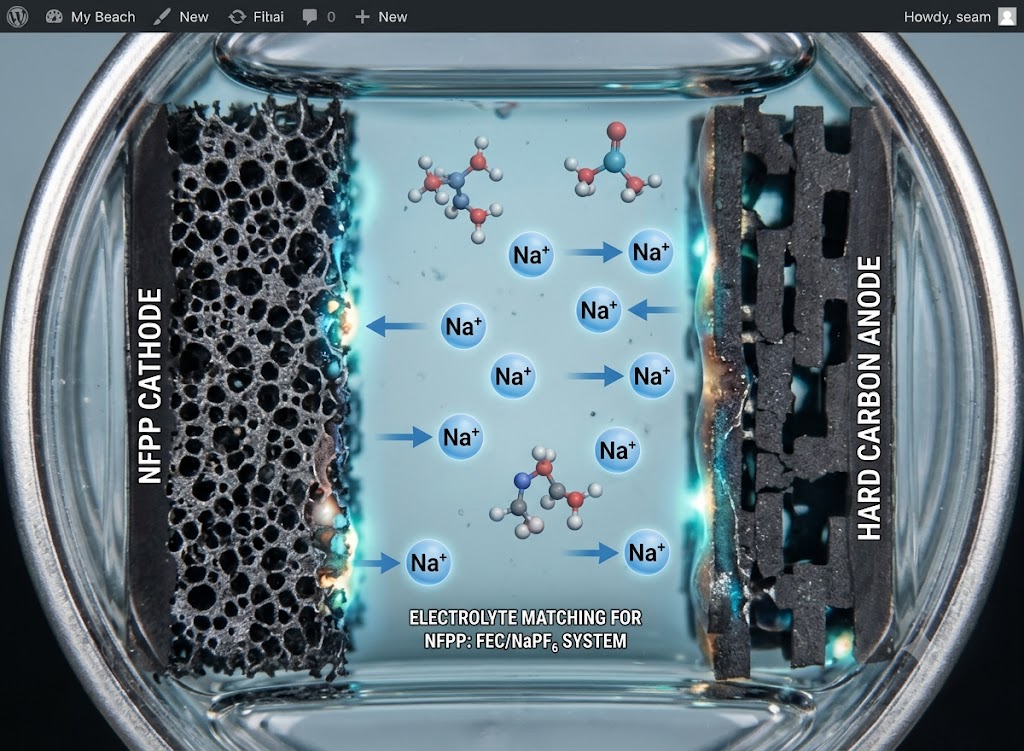
For customers evaluating sodium-ion battery materials, NFPP cathode Material is not only a single cathode product. It is part of a complete material system that may also include hard carbon anode, sodium-ion electrolyte, separator, binder, conductive additive, current collector, and other auxiliary materials.
What Is NFPP?
NFPP is a sodium iron phosphate pyrophosphate cathode material used in sodium-ion battery research and development. It belongs to the broader family of phosphate and pyrophosphate-based polyanionic cathode materials.
These materials are of interest because their crystal structures can provide relatively stable frameworks during cycling. In sodium-ion batteries, structural stability is important because sodium ions are larger than lithium ions, which can create more stress during repeated insertion and extraction.
In practical material supply, NFPP may be offered in different forms depending on synthesis method, particle size, morphology, carbon coating, surface treatment, and application stage.
Why NFPP Is Getting More Attention
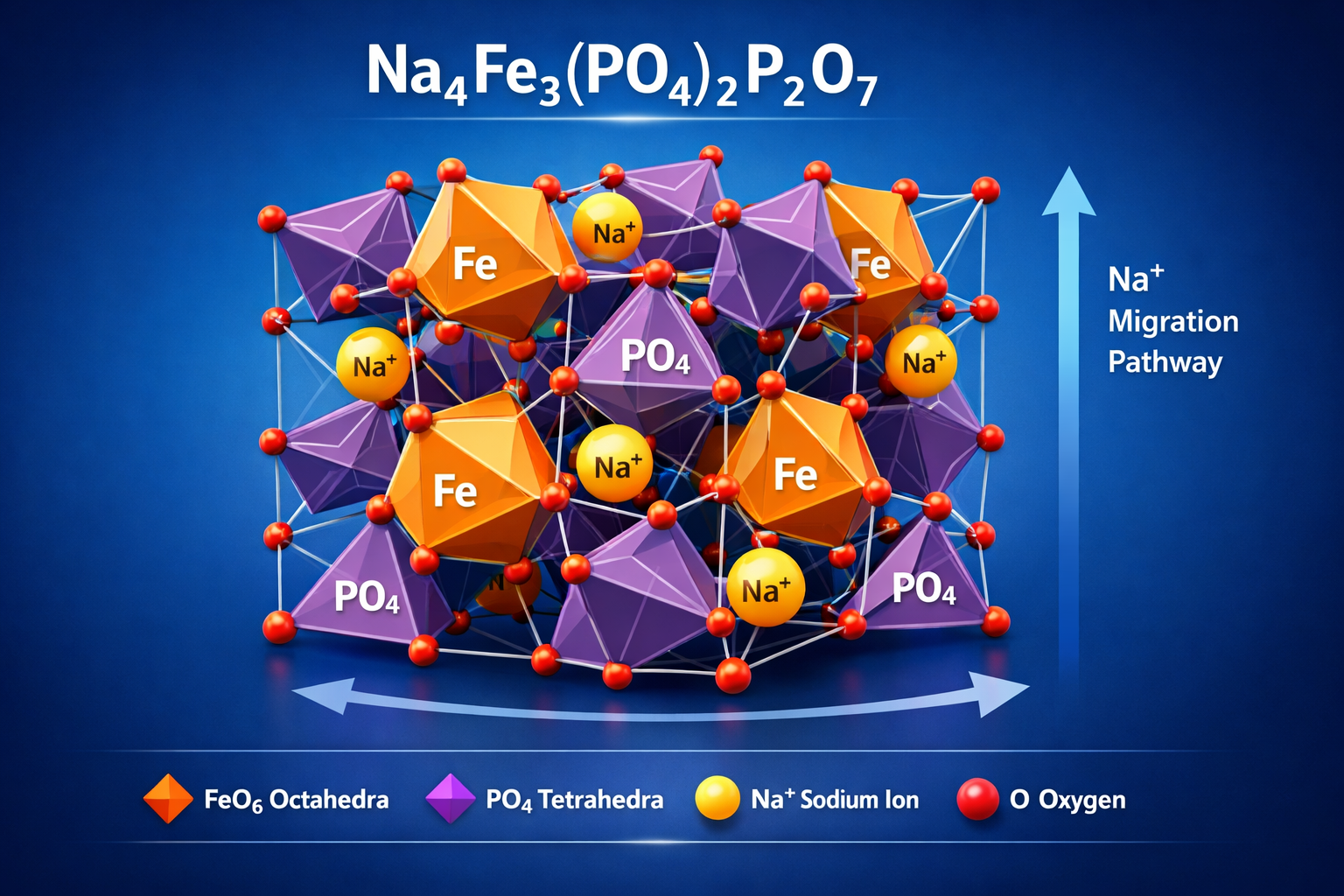
Figure 1. Crystal structure of NFPP (Na₄Fe₃(PO₄)₂P₂O₇), illustrating the arrangement of FeO₆ octahedra, PO₄ tetrahedra, and the Na⁺ migration pathways within the framework.
1. Sodium-Ion Batteries Need Cost-Effective Cathode Options
One reason sodium-ion batteries are attracting attention is the wider availability of sodium resources compared with lithium. However, the cost advantage of sodium-ion batteries depends not only on sodium itself, but also on the full material system.
NFPP is iron-based and phosphate-based, which can be attractive for customers looking for cathode materials without nickel or cobalt. For applications where raw material availability, cost control, and supply chain stability are important, this makes NFPP worth evaluating.
2. Iron-Based Chemistry Supports Supply Chain Stability
Battery companies are paying more attention to supply chain risk. Materials based on abundant elements are easier to consider for long-term development, especially for energy storage and cost-sensitive applications.
NFPP uses iron and phosphate components, which are generally more accessible than some high-cost transition metals. This does not mean every NFPP product is automatically low-cost, because processing, consistency, carbon coating, particle control, and quality management all affect final pricing. But from a material strategy perspective, iron-based cathodes are attractive.
3. Phosphate-Based Structures Are Valued for Stability
Phosphate-based battery materials are often valued for their structural and thermal stability. In sodium-ion cathodes, stability during sodium insertion and extraction is an important factor for cycle performance and safety evaluation.
NFPP’s polyanionic framework can help provide structural robustness, which is one reason researchers and cell developers are interested in this material.
4. NFPP Is Relevant for Energy Storage Applications
Sodium-ion batteries are frequently discussed for energy storage systems, low-speed electric vehicles, backup power, industrial applications, and other cost-sensitive areas. These applications may not always require the highest energy density, but they often require good safety, stable supply, acceptable cycle life, and competitive cost.
NFPP may be considered in these development directions, especially when the customer wants to evaluate sodium-ion battery materials with relatively stable chemistry and iron-based composition.
5. It Creates Opportunities for Complete Material Matching
Cathode performance cannot be separated from the rest of the cell system. When a customer tests NFPP, they also need to consider:
– Hard carbon anode selection
– Sodium-ion electrolyte compatibility
– Separator choice
– Binder system
– Conductive additive
– Aluminum current collector
– Moisture control
– Electrode preparation process
– Formation and testing conditions
This is why NFPP creates opportunities not only for cathode material supply, but also for one-stop sodium-ion battery material support.
Key Factors Customers Should Check Before Choosing NFPP
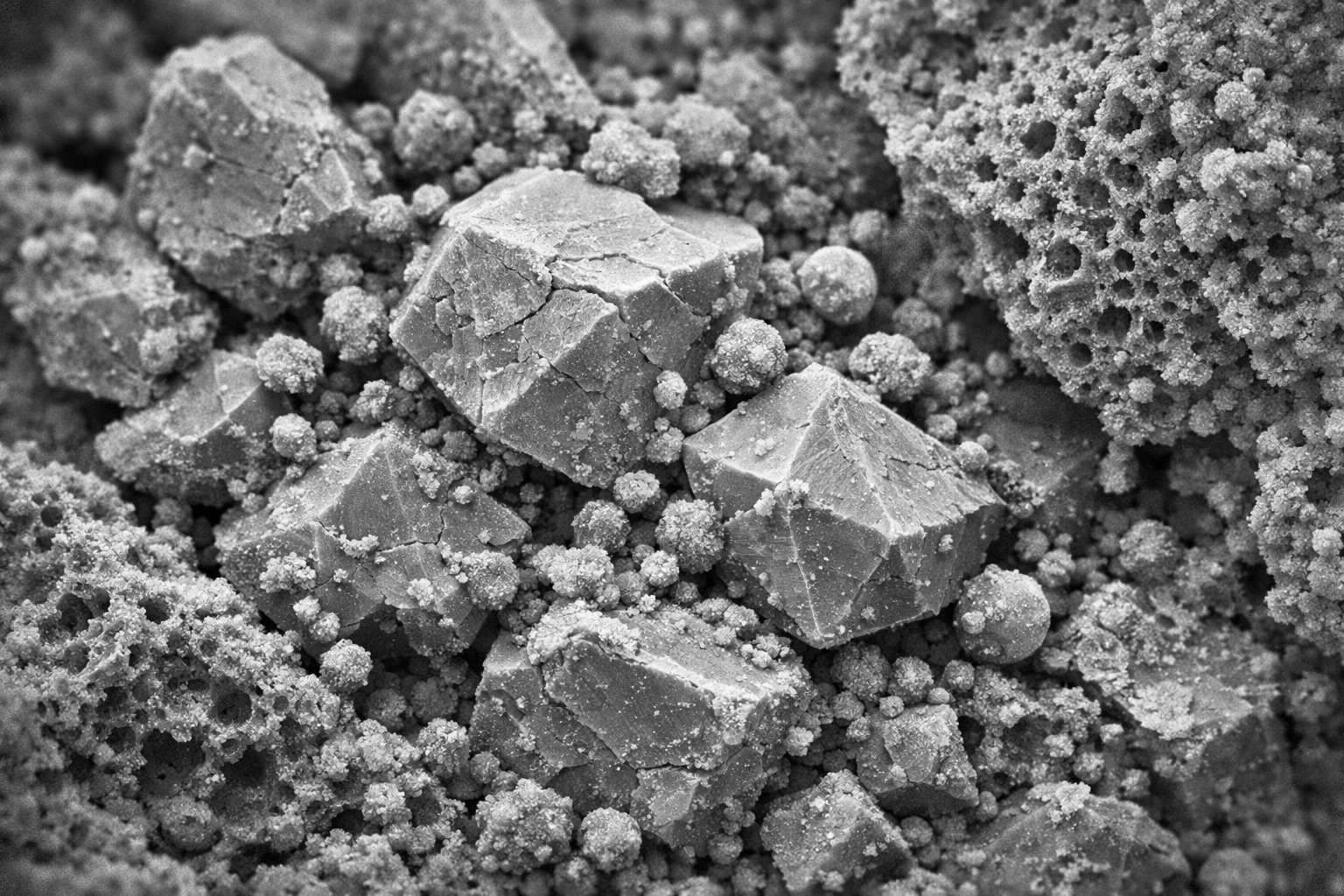
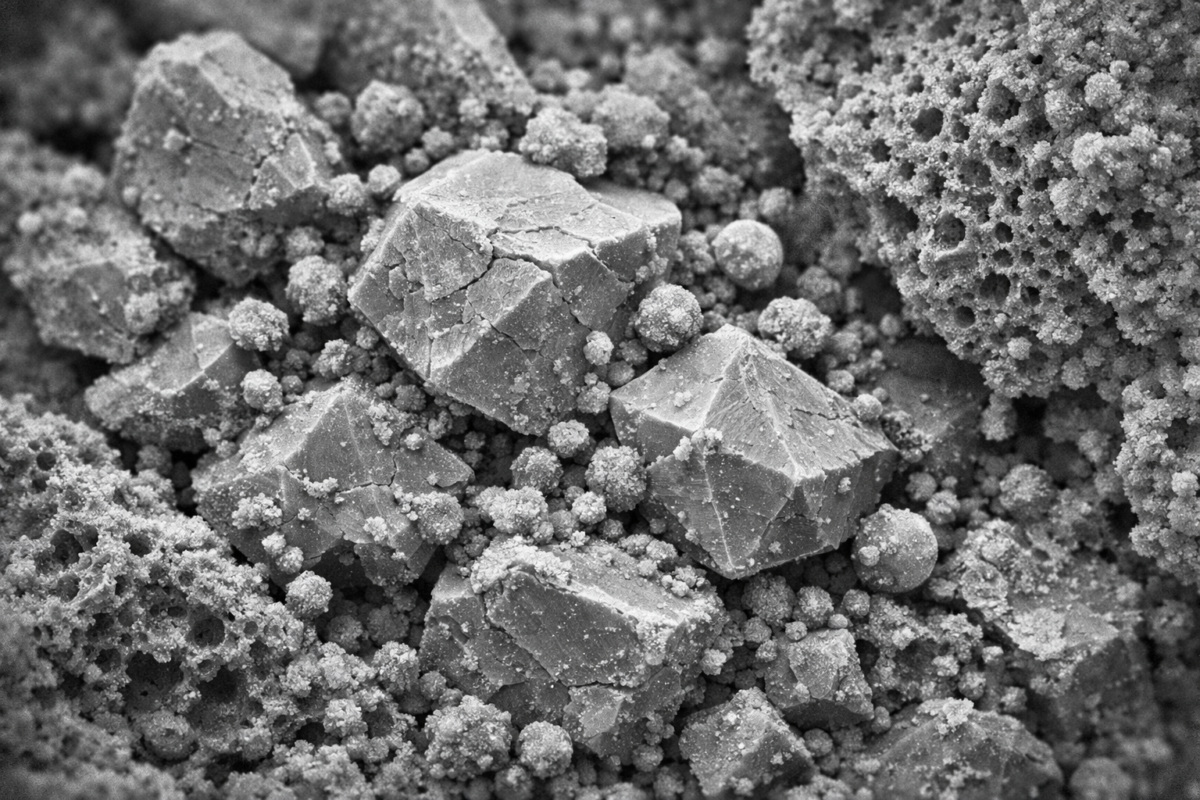
Figure 0. Abstract SEM‑inspired visualization representing the microstructural texture of NFPP cathode material.
When sourcing NFPP cathode material, customers should not only ask for a price. They should also check:
– Chemical composition
– Particle size distribution
– Carbon coating condition
– Moisture level
– Tap density
– Specific surface area
– Electrochemical test conditions
– Recommended voltage range
– Matching electrolyte system
– Sample availability and batch consistency
Different NFPP samples may show different results depending on production process and testing conditions. For R&D customers, comparing materials under the same testing system is important.
NFPP Is Promising, But It Still Needs System-Level Optimization
Although NFPP is attracting attention, it should not be presented as a universal solution for every sodium-ion battery application. Like other cathode materials, it has advantages and limitations.
Customers usually need to evaluate conductivity, electrode processing, voltage platform, rate performance, moisture sensitivity, electrolyte compatibility, and full-cell performance with hard carbon anode.
For this reason, material selection should be based on real application requirements rather than only theoretical advantages.
How One-Stop Material Support Helps NFPP Testing
For many battery R&D teams and pilot-line customers, the challenge is not only finding NFPP cathode material. They also need matching materials and technical communication.
A complete NFPP sodium-ion battery testing package may include:
– NFPP cathode material
– Hard carbon anode material
– Sodium-ion electrolyte
– Separator
– Binder
– Conductive carbon
– Aluminum foil
– Coin cell parts or pouch cell support materials
One-stop material support can help customers reduce sourcing time and make testing more efficient.
Conclusion
NFPP is attracting attention in sodium-ion batteries because it combines iron-based raw materials, phosphate-based structural stability, and potential suitability for cost-sensitive applications. However, successful testing depends on more than the cathode material itself.
For customers developing NFPP-based sodium-ion batteries, cathode quality, electrolyte matching, hard carbon selection, and auxiliary material compatibility should all be considered together.
Looking for NFPP cathode material or sodium-ion battery material matching support?
Contact OneEnergi for NFPP samples, hard carbon, sodium-ion electrolyte, and related battery materials.