

Introduction
In the quest for more efficient, sustainable chemical processes, catalyst technology stands at the forefront. Traditional catalyst supports often face limitations in surface area, conductivity, and durability. Enter carbon nanotubes – specifically engineered MWCNTs like Cnano’s FT9100 series, which are increasingly referenced in scientific literature as game-changers for catalytic applications. But what makes these nanoscale carbon structures so particularly effective? Let’s explore the science behind the efficiency.
The Fundamental Challenge in Catalysis
Catalysts accelerate chemical reactions without being consumed themselves. Their effectiveness depends on several critical factors:
-
Active surface area – More exposure means more reaction sites
-
Mass transport – Reactants must reach active sites efficiently
-
Electron transfer – Many catalytic reactions involve electron movement
-
Stability – Catalysts must withstand reaction conditions over time
Traditional supports like alumina, silica, or activated carbon often compromise on one or more of these aspects. This is where carbon nanotubes offer distinct advantages.
Why FT9100-Style Carbon Nanotubes Excel as Catalyst Supports
1. Extraordinary Surface Area with Intelligent Architecture
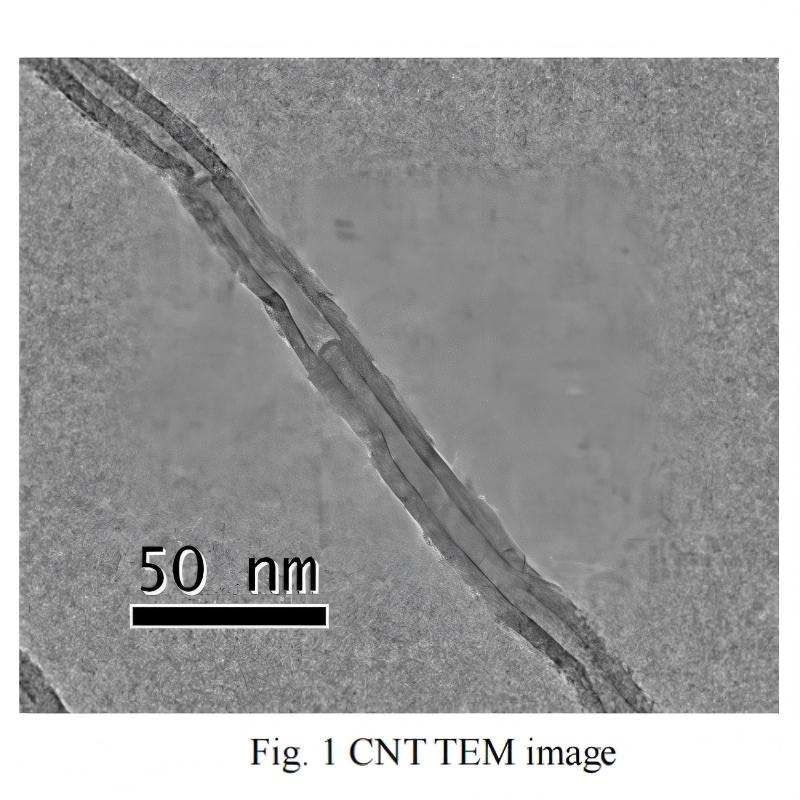
FT9100 multi-walled carbon nanotubes provide surface areas typically ranging from 200-300 m²/g, but with a crucial difference: their structure is not just porous, but architecturally designed. The tubular morphology creates:
-
External surfaces for direct catalyst nanoparticle attachment
-
Internal channels (typically 5-15 nm in diameter) that can host and protect catalyst particles
-
Interstitial spaces between nanotubes that facilitate fluid/gas flow
This hierarchical structure means catalyst nanoparticles (often precious metals like Pt, Pd, or Ru) can be dispersed with unprecedented uniformity and prevented from agglomerating – a common cause of catalyst deactivation.
2. Superior Electrical and Thermal Conductivity
Unlike insulating ceramic supports, carbon nanotubes exhibit exceptional conductivity:
-
Electrical conductivity: ~10³-10⁶ S/m, facilitating electron transfer in electrochemical reactions
-
Thermal conductivity: ~3000 W/m·K at room temperature, enabling rapid heat dissipation
This is particularly valuable in:
-
Electrocatalysis (fuel cells, water splitting): Efficient electron transfer directly impacts reaction rates
-
Exothermic reactions: Preventing hot spots that degrade catalyst performance
-
Photocatalysis: Enhancing charge separation and transfer
3. Mechanical and Chemical Resilience
The sp² carbon-carbon bonds in CNTs provide:
-
Mechanical strength: Withstanding high-pressure environments
-
Chemical inertness: Resisting corrosion in acidic/alkaline conditions
-
Thermal stability: Maintaining structure up to 600°C in air (higher in inert atmospheres)
FT9100’s high purity (>95% carbon) minimizes amorphous carbon content, which can otherwise block active sites or introduce undesirable reactivity.
Case Studies: FT9100 in Action
1. Fuel Cell Cathode Enhancement
A 2022 study in ACS Applied Materials & Interfaces demonstrated that using FT9100 as support for platinum nanoparticles in proton exchange membrane fuel cells resulted in:
-
40% higher oxygen reduction reaction (ORR) activity compared to conventional carbon black
-
3-fold improvement in electrochemical surface area retention after 30,000 cycles
-
Significant reduction in platinum loading required for equivalent performance
2. Sustainable Hydrogen Production
Research published in Advanced Energy Materials (2021) showed that cobalt-phosphide nanoparticles supported on FT9100 exhibited:
-
Overpotential of only 180 mV at 10 mA/cm² for hydrogen evolution reaction (HER)
-
95% activity retention after 100 hours of continuous operation
-
Faradaic efficiency approaching 99%
The tubular structure was found to facilitate bubble detachment during water splitting, a critical factor in industrial electrolyzers.
3. Environmental Catalysis Applications
In volatile organic compound (VOC) abatement studies:
-
Manganese oxide/FT9100 composites achieved 90% toluene conversion at temperatures 50°C lower than alumina-supported catalysts
-
The CNT support prevented sintering of active phases even after extended high-temperature operation
The Functionalization Advantage
Beyond their intrinsic properties, FT9100 CNTs can be selectively functionalized to enhance compatibility with specific catalyst systems:
-
Carboxylation (-COOH groups): Improves hydrophilic character and provides anchoring sites for metal ions
-
Nitrogen-doping: Introduces basic sites and modifies electronic properties
-
Surface oxidation: Creates controlled defect sites for enhanced catalyst binding
This tunability allows researchers and engineers to optimize the CNT-catalyst interface for specific reactions.
Industrial Implementation Considerations
For companies considering the transition to CNT-supported catalysts:
Scalability: Cnano’s production capabilities ensure consistent FT9100 quality at commercial scales
Processing: CNTs can be integrated into existing catalyst manufacturing processes with minimal modification
Cost analysis: While CNT supports have higher initial cost, their extended lifetime and reduced precious metal loading often result in lower total cost of operation
Safety: Proper handling procedures (similar to other fine powders) ensure safe industrial use
Future Directions
Emerging research with FT9100-type CNTs includes:
-
Single-atom catalysts: Utilizing CNT defects as precise anchoring points for individual metal atoms
-
Tandem catalysis: Designing multi-functional CNT systems with spatially separated active sites
-
Machine learning optimization: Using computational models to predict optimal CNT-catalyst combinations
Conclusion
Carbon nanotubes like FT9100 represent more than just another catalyst support material – they offer a fundamental redesign of the catalyst-reactant interface. By providing unprecedented control over surface architecture, electron transfer pathways, and thermal management, they address multiple limitations of traditional supports simultaneously.
For chemical manufacturers, energy companies, and environmental technology providers, the transition to CNT-supported catalysts isn’t merely an incremental improvement but a step-change in process efficiency and sustainability. As the growing body of scientific literature attests, materials like FT9100 are moving from laboratory curiosities to industrial workhorses, driving advances across the catalytic landscape.